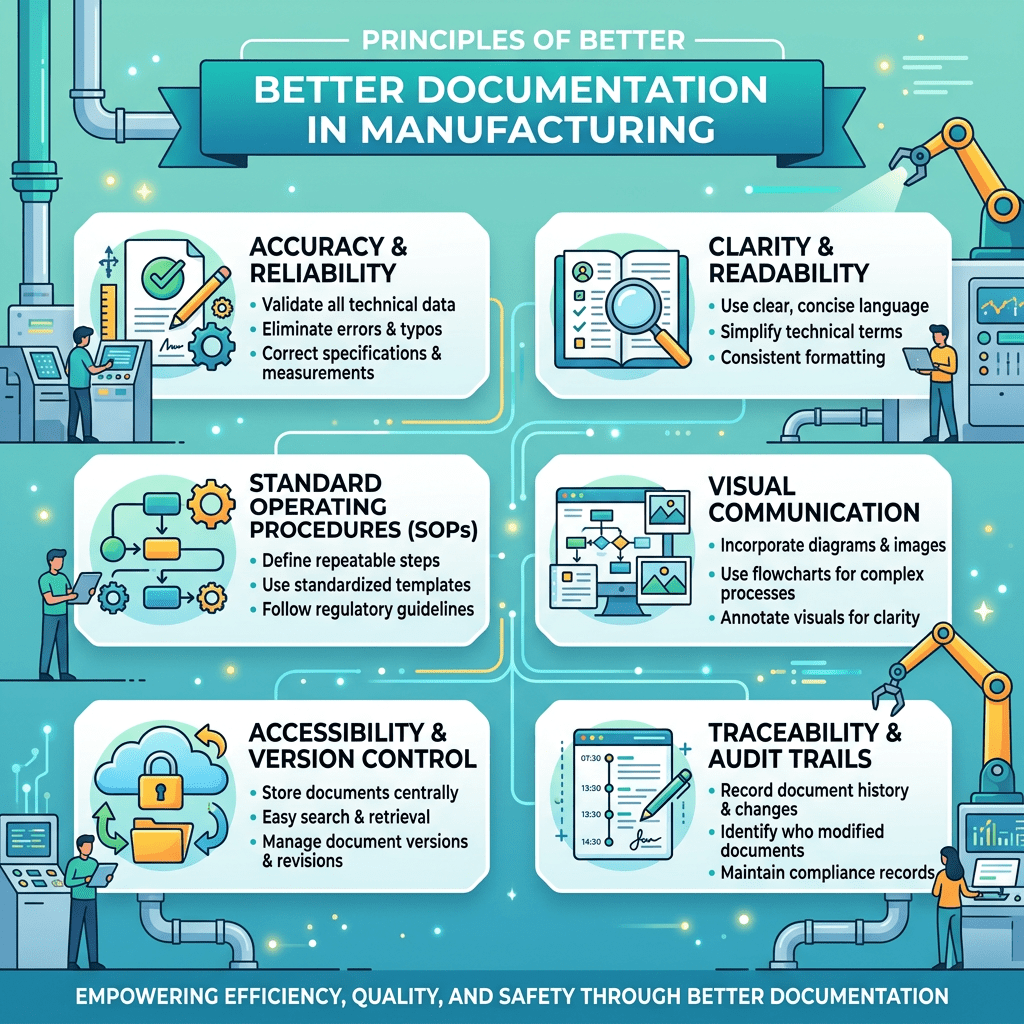
Clarity drives adoption, not just capability
Technology adoption in manufacturing is rarely limited by capability.More often, it is limited by clarity.
Organizations invest in advanced systems performance tools, optimized workloads, new architectures. Yet adoption slows down not because the technology fails, but because people don’t fully understand how to use it in real conditions. Documentation is often treated as the final step.In reality, it should be part of the core engineering process.
In manufacturing environments:
Downtime is expensive
Errors are hard to reverse
Systems must be predictable
Here, documentation is not optional, it is operational.
Good documentation answers:
What does this system actually do in production?
How should it be configured for specific workloads?
What trade-offs should teams expect?
Without this, teams rely on assumptions, leading to underutilization or incorrect implementation.
What Better Documentation Should Look Like
Context-driven, not generic → tailored to real use cases
Actionable, not descriptive → clear steps, not just theory
Aligned with workflows → reflects actual shop floor realities
Continuously updated → evolves with systems and feedback
Technology may enable transformation. But documentation decides whether that transformation is adopted, or abandoned. The real competitive advantage isn’t just building advanced systems.It’s ensuring people can confidently use them.
 Words panorama