


Maharashtra, a vibrant state on India’s western coast, is not only rich in culture and tradition but also in culinary delights.
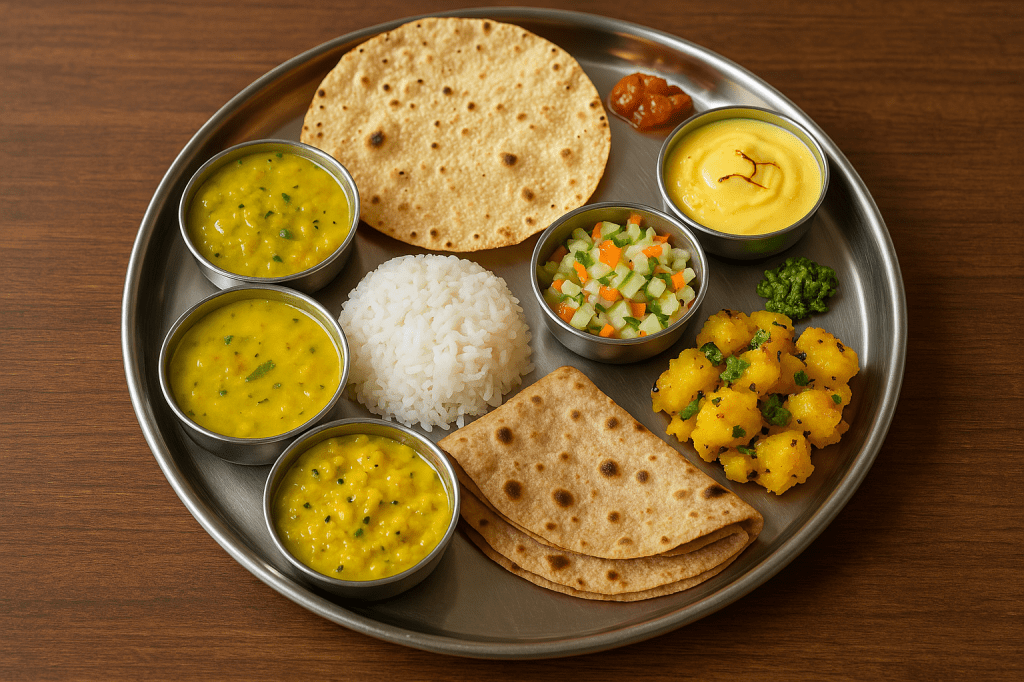
A traditional Maharashtrian Thali (food plate) is a perfect representation of its diverse and flavorful cuisine. It combines bold spices, seasonal ingredients, and an array of textures and colors that delight every sense.
What’s in a Maharashtrian Thali?
A typical Maharashtrian thali strikes a harmonious balance between sweet, spicy, tangy, and savory flavors. While the components can vary from region to region (e.g., Pune, Konkan, Vidarbha), here’s a standard version you’re likely to see:
- Chapati / Bhakri: Soft whole wheat chapatis or traditional jowar/bajra bhakris, perfect for scooping up sabzis.
- Varan-Bhaat: Simple yet comforting – plain dal (varan) paired with steamed rice (bhaat), often topped with ghee.
- Pithla: A spicy, savory gram flour curry, often eaten with bhakri.
- Sabzi: Seasonal vegetables like batata bhaji (spiced potatoes), kanda-batata (onion-potato), or matki usal (sprouted moth beans).
- Koshimbir: A fresh salad with cucumber or carrots, flavored with mustard seeds, green chili, lemon juice, and sometimes curd.
- Chatani: A fiery chutney made of green chilies, garlic, and salt – not for the faint-hearted!
- Papad and Pickle: Crunchy and tangy sides that elevate the meal.
- Sweet Dish: A small serving of puran poli (sweet stuffed flatbread), shrikhand (sweetened yogurt), or modak (a steamed sweet dumpling).
The Essence of the Thali
What makes the Maharashtrian thali special is its balance of nutrition and flavor. Each item is made with locally available ingredients, using traditional methods and age-old recipes. Whether served during a festive celebration or a simple home-cooked lunch, it reflects warmth, generosity, and the deep-rooted food culture of the region.
 words panorama
And economical
LikeLike
yeah, by all means!!
LikeLike
Nandita, your description is a feast for the senses—inviting you to savor tradition, taste, and cultural pride. You walk us through the Maharashtrian Thali’s harmonious blend of sweet, spicy, tangy, and savory delights with clarity and warmth. From comforting varan-bhaat to bold pithla, crisp koshimbir to fiery chutney, every dish you describe celebrates regional richness. Your love for local ingredients and traditional methods shines through, making readers feel as if they’re right there with you, tasting every bite. This isn’t just a meal you serve—it’s a soulful experience on a plate. Beautifully written, lovingly shared. 🌸🍴💛
LikeLike
Thanks, Jay Hind Jay Maharashtra!!
LikeLiked by 1 person