


My current favorite emoji is a curious thinking face. Yes!! These days I am using it very often. There are lots of why what when how and where in mind.
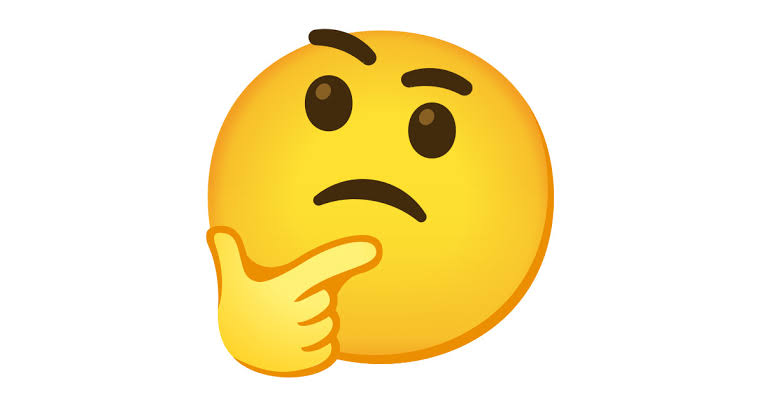
Again after reading today’s prompt, there were lots of thoughts. Here is a jotted verbose version about a simple image.
Emojis…✨ Is it a new language language or a Shortcut? In endless communication, texts fly faster than thoughts. Human beings have found a new way to express themselves, emojis.
But why did we even start using these tiny images in the first place? Humans have always sought easier, quicker ways to express emotion. In ancient times, we painted on cave walls. Later, we wrote poems, letters, and novels. Today, when the speed of life leaves little time for deep expressions, emojis emerged as a natural evolution. They are a way to squeeze feelings into a space that words often fail to fill quickly.
Emojis act like emotional punctuation marks❕
A simple “thank you” can feel cold in a text. Add a smiling face or a heart, and it suddenly feels warmer and more genuine. Emojis soften our conversations, add humor, show sympathy, or even create sarcasm without lengthy explanations.
But Is It Enough❓
A question arises: is this expression of emotions enough? Can a teary face or a clapping hands emoji truly convey the depth of someone’s sadness, joy, or pride? Real feelings are layered and complex, and sometimes a single emoji oversimplifies what we experience deep inside.
Replacing Words with Images 🔤 ➡️ 🖼️
Today, many conversations are sprinkled or even dominated by emojis. Full sentences are replaced with a string of images. “Congratulations” becomes a trophy emoji. “I love you” turns into a heart. “I’m feeling sick” gets replaced by a green, nauseated face. It’s quick and efficient. However, it’s also a little alarming. Are we letting go of our beautiful ability to articulate emotions through language?
Connection or Disconnection? 🔗 / ❌
Emojis bridge distances, you can make a friend across the world smile with just a silly cat face. They break language barriers and allow instant emotional recognition. But at the same time, they can create gaps. A thumbs-up might feel supportive to one person but dismissive to another. Misinterpretations grow when context shrinks. Are we risking shallow connections instead of meaningful conversations?
Hiding in Plain Sight 🎭
Emojis also allow people to stay undercover in social interactions. Behind a happy face emoji, one might hide loneliness. Behind the applause, there could be envy. It’s easier to “blend into the crowd” using a few cheerful images than to truly open up. This digital masking, while providing comfort, also leads to emotional isolation.
Are We Becoming Robots? 🤖
Sometimes, it feels like we are slowly turning into mechanical beings, sending pre-programmed responses, avoiding messy human emotions. But perhaps, it’s not that dark. Maybe it’s just our way of surviving in a fast-paced world.
A Simple Time Saver ⌛
Yes, emojis are undeniably time savers. They help us express *something* when we don’t have time to say *everything*. In a world where conversations often compete with deadlines, emojis offer a brief but valuable opportunity to share an opinion, offer support, or simply show that we care.
After all, don’t we often say… “Lesser words speak more”? Similarly, a single image can sometimes speak louder than a paragraph.
Maybe that’s what emojis really are — our attempt to say, “I’m here, I care,” even when time and words fall short…
 Words panorama